Assessment of Changes in the Lower Keys Tarpon Fishery
On behalf of Bonefish & Tarpon Trust and the Lower Keys Guides Association - an investigation into the decline of the Tarpon fishery.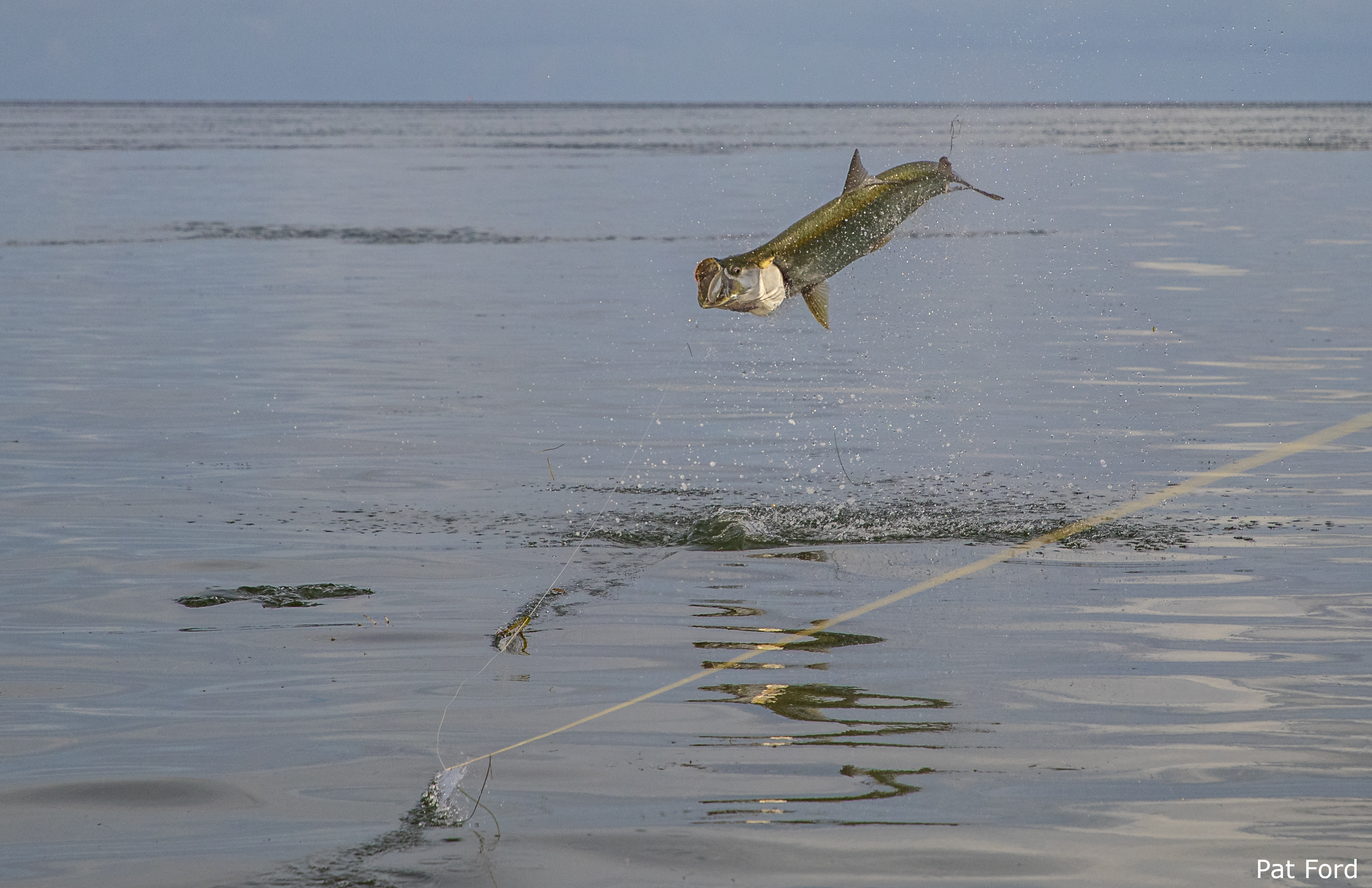

On behalf of Bonefish & Tarpon Trust and the Lower Keys Guides Association - an investigation into the decline of the Tarpon fishery.
In July 2023, water temperatures in the Florida Keys reached record highs (>90 F!) causing significant coral bleaching and fish kills.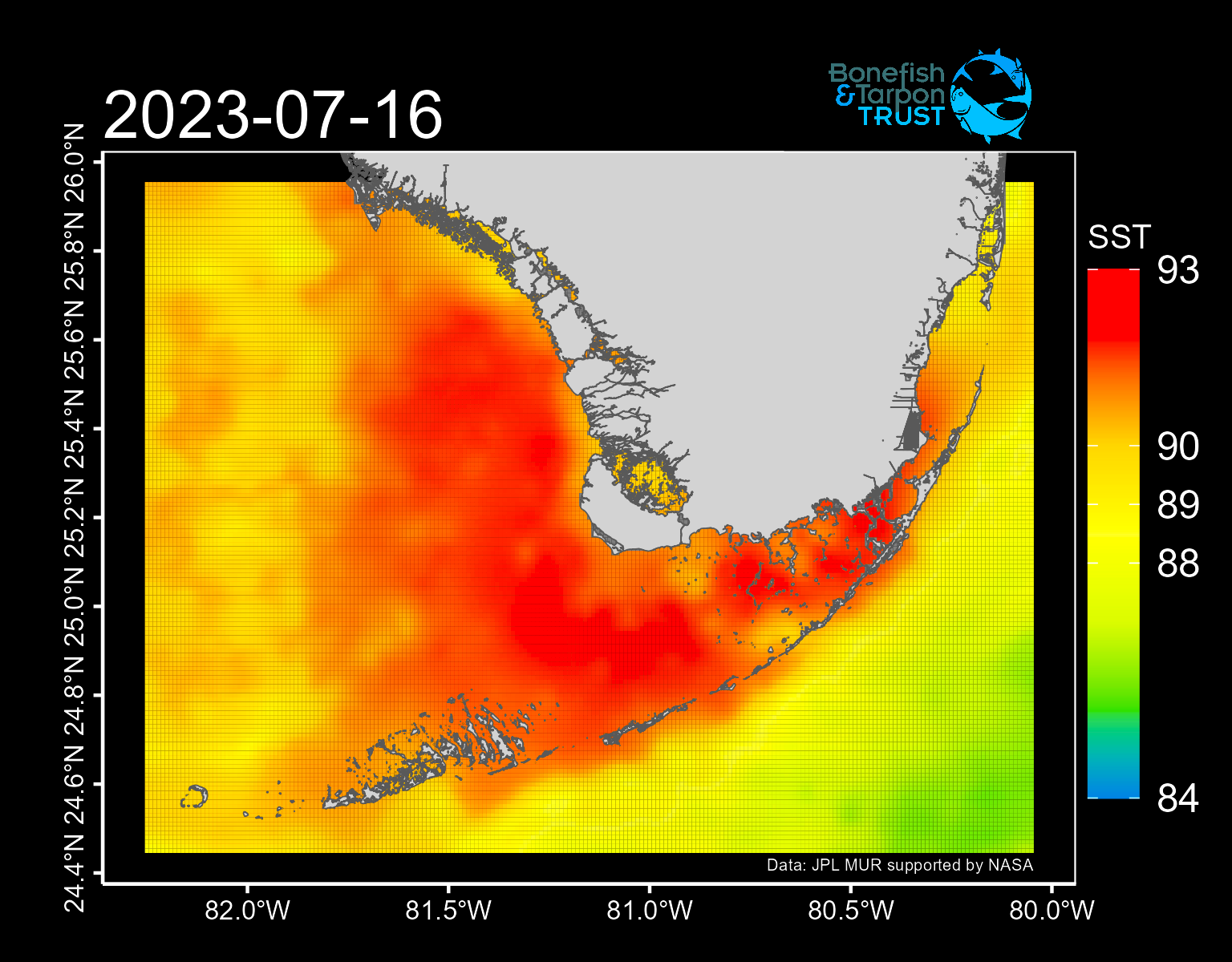
The larval dispersal models that I programmed and visualized here are from my publication on Bonefish larval dispersal. Modeling and visualizing in Ichthyop, R, and ArcGIS allow for insights into population connectivity, larval development environments, and spatial management assessments. They also make for compelling visuals!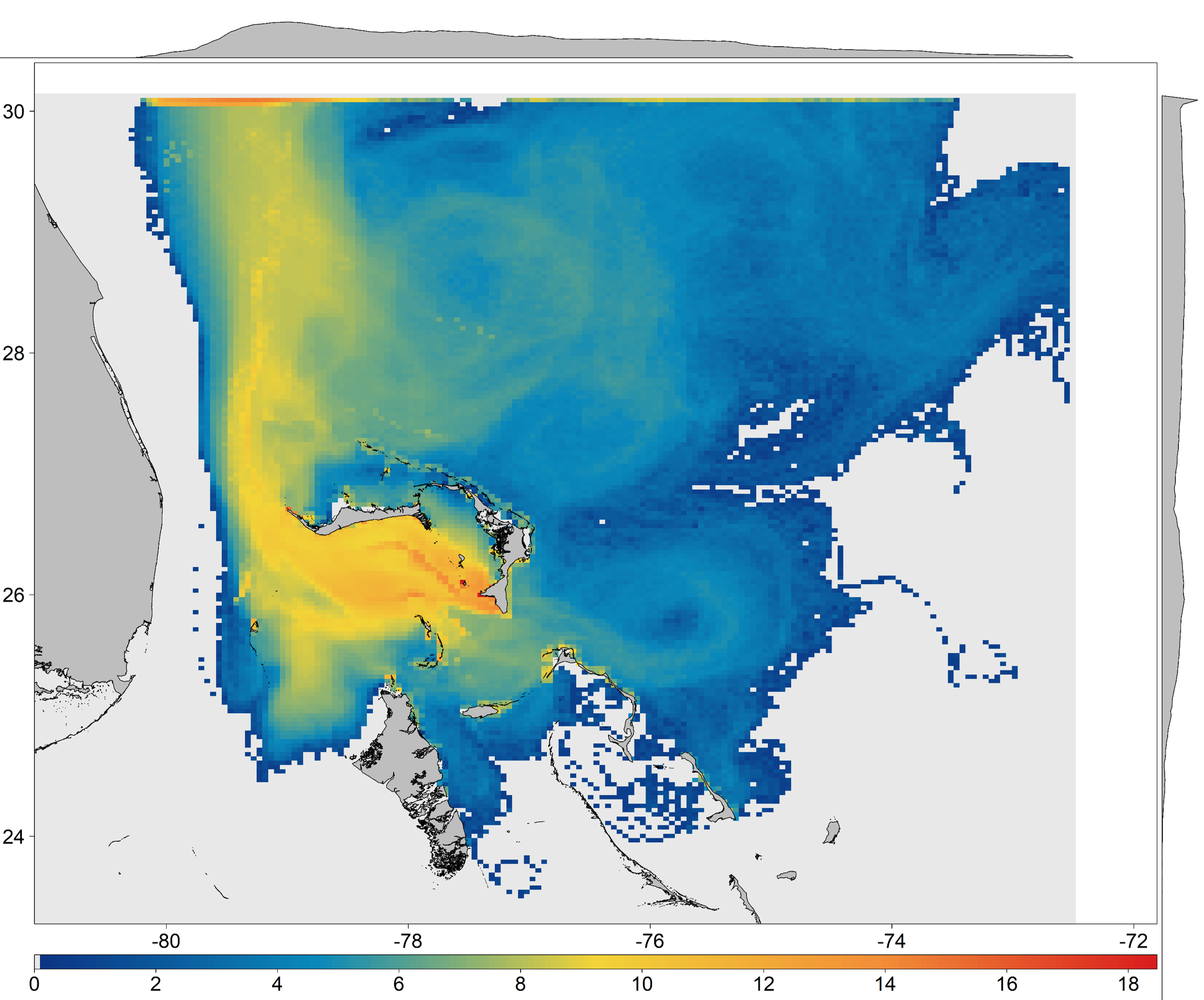
Take a ride offshore with 5000 Bonefish to 450 feet deep! This was a discovery of a lifetime!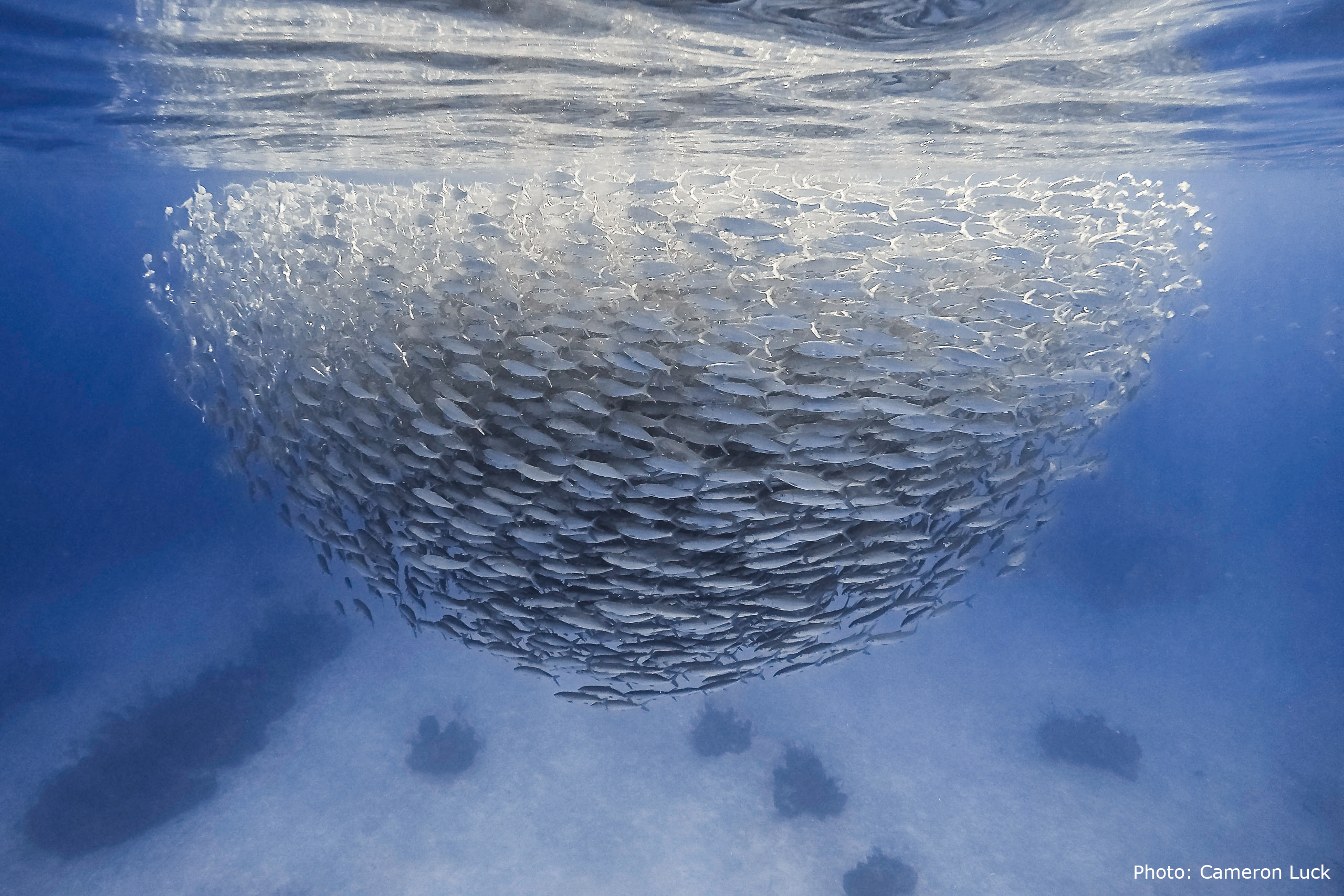
Particle dispersal simulations (individual based models) are often employed to predict dispersal patterns of contaminants or biologics (e.g., larvae) at sea. Here, I was contracted to recreate the trajectory of a capsized vessel.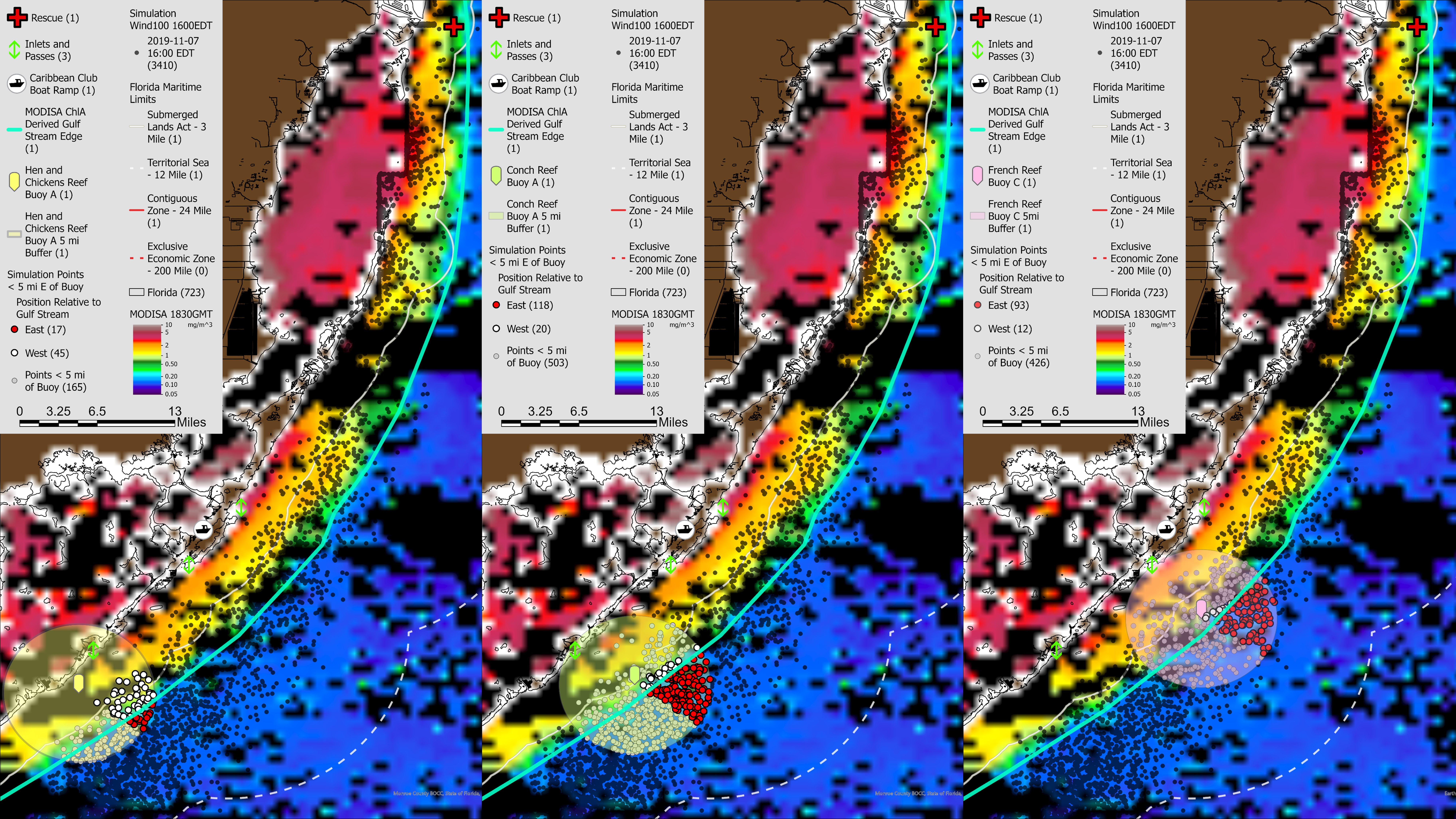
Nursery habitats are the foundation for healthy fish populations. Experiments to eleucidate nursery habitat preferences (e.g., seagrass, structure) can help to guide protective, restorative, or re-introduction efforts.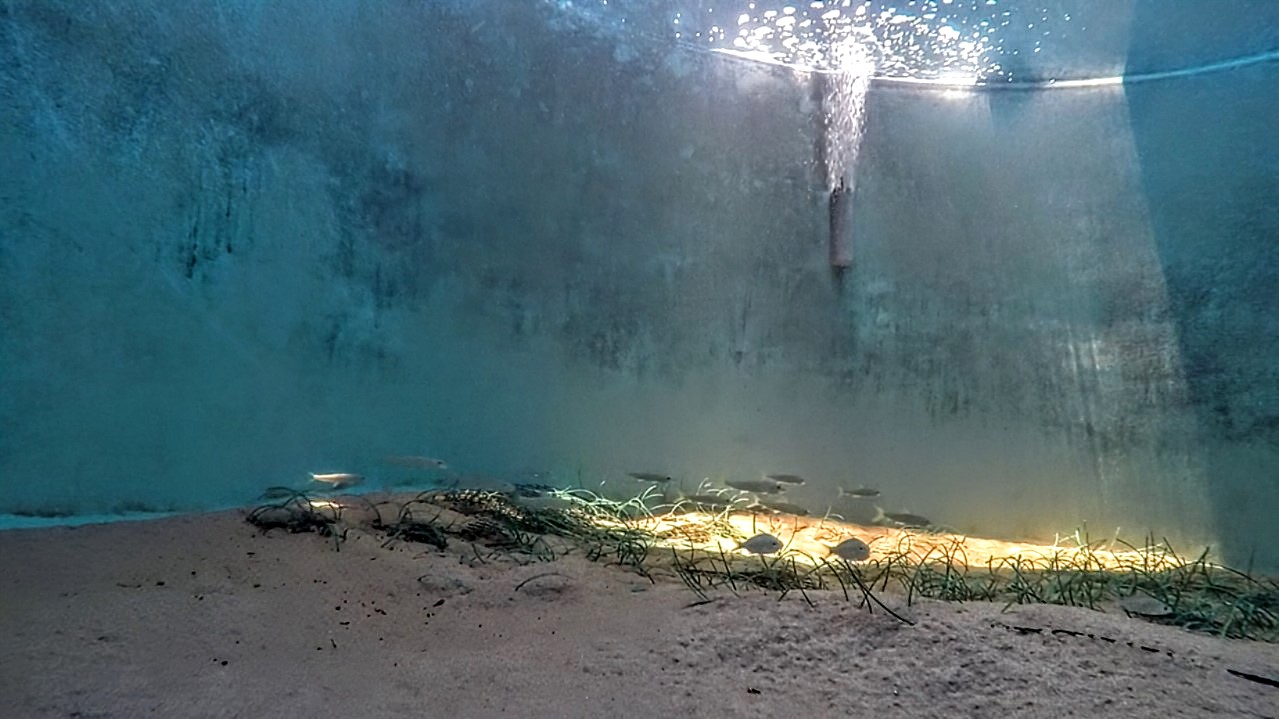
Published in Canadian Journal of Fisheries and Aquatic Sciences, 2020
Spawning migration phenology of River Herring was characterized from the 1970s through 2010s. The increased rate of warming for river waters during spring upstream migrations has resulted in earlier and condensed time spent on the spawning grounds for both species, with blueback herring being most negatively affected. These anadromous baitfish have been under a harvest moratorium in NC since 2007, and with climatic trends indicating further reduction in spawning duration and production it is unlikely that the fishery will re-open in the future.
Recommended citation: Lombardo, S. M., Buckel, J. A., Hain, E. F., Griffith, E. H., & White, H. (2020). Evidence for temperature-dependent shifts in spawning times of anadromous alewife (Alosa pseudoharengus) and blueback herring (Alosa aestivalis). Canadian Journal of Fisheries and Aquatic Sciences, 77(4), 741-751. http://smlombardo.github.io/files/RiverHerringPhenology.pdf
Published in Marine Biology, 2020
Bonefish are a prized target of the catch-and-release flats fisheries of the Caribbean. Their complete offshore spawning behaviors had yet to be documented, though few partial observations had been made. We used active acoustic telemetry to follow Bonefish offshore and document spawning behaviors at depths reaching 137 m - an incomparable disparity between homerange habitats (3 m) and spawning habitats. Spawning behaviors were associated with the thermocline. These observations helped to inform larval dispersal models, established spawning habitat requirements, and allowed for evaluation of marine protected area network protection efficacy within The Bahamas and elsewhere (i.e., Florida).
Recommended citation: Lombardo, S. M., Adams, A. J., Danylchuk, A. J., Luck, C. A., & Ajemian, M. J. (2020). Novel deep-water spawning patterns of bonefish (Albula vulpes), a shallow water fish. Marine Biology, 167, 1-11. http://smlombardo.github.io/files/BonefishSpawning.pdf
Published in Marine and Coastal Fisheries, 2021
Coastal development has dramatically changed the functional capacity of habitats to provide for native species. Salt marshes are diverse and highly productive systems that have been dramatically reduced in the development process. We developed a biomass production projection method that links contemporary and historical arial imagery of salt marsh coverage with mummichog Fundulus heteroclitus abundance. This method provides a means for assessing ecosystem value-added or value-subtracted by restoration or development, respectively.
Recommended citation: Rudershausen, P. J., Lombardo, S. M., & Buckel, J. A. (2021). Linking historical changes in salt‐marsh coverage to lost production of a nektonic bioindicator. Marine and Coastal Fisheries, 13(2), 131-139. http://smlombardo.github.io/files/SaltMarshProduction.pdf
Published in PLoS ONE, 2022
Bonefish are a prized sportfish in the catch-and-release flats fisheries of the Caribbean. With the new discovery of spawning associations with the thermocline, biologically and ecologically accurate larval dispersal models could finally be created to evaluate within-region connectivity and the efficacy of The Bahamas marine protected areas network to protect potential Bonefish nursery habitats. The results of the larval dispersal simulations revealed the relationships with seasonal ephemeral gyres, the boom-or-bust success of spawning, and the thermal and depth environments that Bonefish larvae experience over their 41-71 day pelagic larval duration. The Bahamas marine protected areas network provided ample protection for Bonefish nurseries, though some suggestions were made for park expansions.
Recommended citation: Lombardo, S. M., Chérubin, L. M., Adams, A. J., Shenker, J. M., Wills, P. S., Danylchuk, A. J., & Ajemian, M. J. (2022). Biophysical larval dispersal models of observed bonefish (Albula vulpes) spawning events in Abaco, The Bahamas: An assessment of population connectivity and ocean dynamics. PLoS ONE, 17(10), e0276528. http://smlombardo.github.io/files/BonefishLarvalDispersal.pdf
Published in Environmental Biology of Fishes, 2023
Bonefish are a prized sportfish in the catch-and-release flats fisheries of Florida. Being a catch-and-release fishery, they are a data-poor species and population status cannot be assessed using stock assessment methods. To document historical changes in Bonefish populations in the Florida Keys, we pooled together annually occuring Bonefish fishing tournament records to track the status and trends of the fishery. We provide an example of a novel means for assessing data-limited recreational fisheries.
Recommended citation: Boucek, R. E., Rehage, J. S., Castillo, N. A., Dwoskin, E., Lombardo, S. M., Santos, R., ... & Adams, A. J. (2023). Using recreational tournament records to construct a 53-year time series of the Florida Keys recreational Bonefish fishery. Environmental Biology of Fishes, 106(2), 279-291. http://smlombardo.github.io/files/BonefishTournament.pdf
Published:
This is a description of your talk, which is a markdown files that can be all markdown-ified like any other post. Yay markdown!
Published:
This is a description of your conference proceedings talk, note the different field in type. You can put anything in this field.
Undergraduate course, University 1, Department, 2014
This is a description of a teaching experience. You can use markdown like any other post.
Workshop, University 1, Department, 2015
This is a description of a teaching experience. You can use markdown like any other post.